
Return To The Estates

We need to ditch the “elites” terminology and go back to the old “estates.”
“Elites” just doesn’t map properly any more - it works best in a historic, observational sense of, “we can see that in these burial sites, because they had rich gold hoards or ceremonial weapons, that they were of the city’s elite.” The tension between “elites who have power” and “elites without power, but people want to emulate them” and “do elites have to be rich?” means people are constantly arguing past enough other.
We constantly have these stupid circular definition debates:
Person 1: The elites are doing this bad thing, we must stop them!
Person 2: I totally agree, I can’t believe that obviously elite asshole Bob is promoting that stuff.
1: What? No, Bob isn’t an elite, he’s just a rich businessman?
2: Right, but since people listen to him and emulate him, that makes him an elite.
1: No way, the real elites are like Tim, who’s the president, they’re the ones doing the bad stuff. They have actual power!
2: Tim’s not elite, he ran on an explicitly populist platform of attacking the elites, like those ivory tower professors like Steve that are brainwashing everyone!
1: How can some boring pudgy professor with patches on his elbows be “elite”? No one listens to them! He can’t possibly enforce this bad thing!
2: His paper Interplays of Elite Signaling In Victorian Oklahoma had an impact score of 6.9! That’s even more influence than Sally, who writes for the Times!
1: Wait, now you think random reporters are “elites?” I know for a fact she can only afford to eat ramen 7 days a week!
Me: I hate you both so much, why are you doing this instead of talking about the actual bad thing, or maybe how we’d fix it?
1/2: Cause it gets more clicks to talk about “who” instead of “what,” remember to like and subscribe!!!
Me: [gunshots]
How many times have you read something like that? How many times do they ever get around to actually debating something of merit, on some objective grounds?
Historically, we had a much more accurate, detailed system with the Three Estates:
The best known system is the French Ancien Régime (Old Regime), a three-estate system which was made up of a First Estate of clergy, a Second Estate of titled nobles, and a Third Estate of all other subjects (both peasants and bourgeoisie).
Maybe we could just update the names/categories slightly, emphasizing the most important feature of any category of society: the ability/method of making others do what they want.
The Powerful
Nobility and their servants (obviously not necessarily hereditary, but essentially people who wield actual legal power - they make you do something with legal authority) - modern additions of soldiers, police, bureaucrats and lawyers.
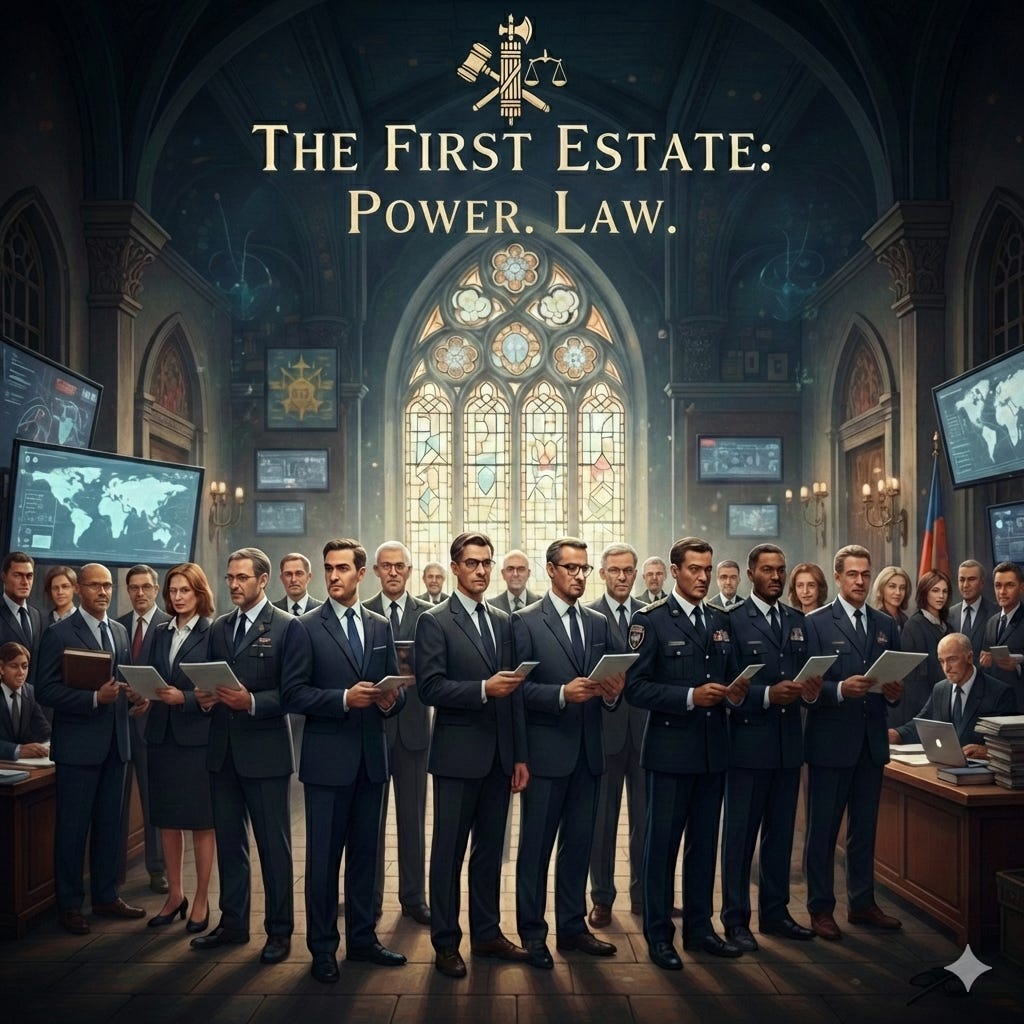
The Persuasive
Clergy/media/priesthood/academics - the world of ideas, influence - they convince you to do something with words. “Wait, come on, are you saying that Anderson Cooper is a essentially a bishop?” Yes, keep up.
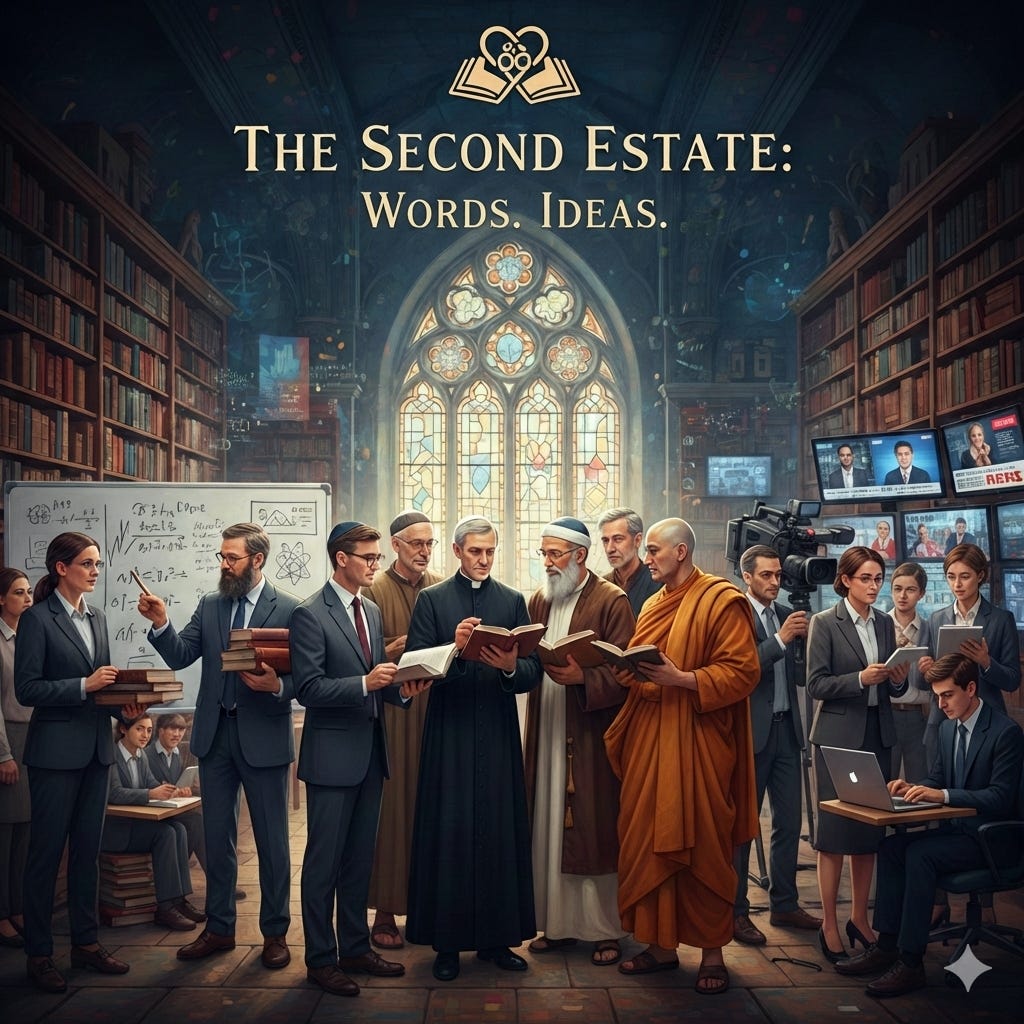
The Prosperous
Burghers/artisans/guilds - they can only convince you of something in exchange for money, sufficiently rare labor skills or value. Modern additions of skilled/credentialed labor, engineers, doctors or small business owners.
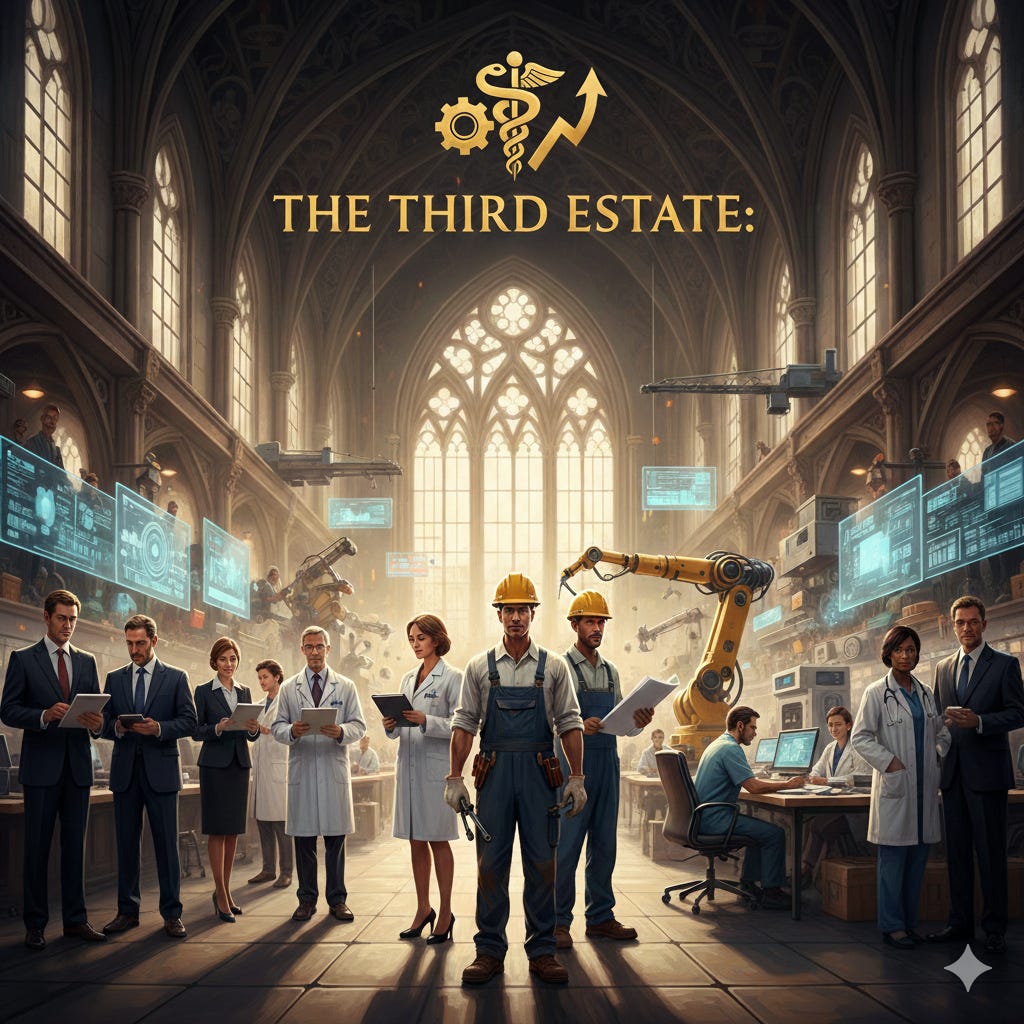
The People
Which leaves the “average Citizens/Everyone else”: while the “Fourth Estate” as a term is already taken (Carlyle, come on, seriously, obviously reporters are part of the clergy estate, how could you not see this?), this is essentially all the other people who can’t (or choose not to) persuade with words, legal power or money to particularly influence anyone to their point of view. Maybe we can label them the Zeroth Estate. They don’t get an AI image for relevant symbolic reasons.
See? This is so much better! Now we can talk more accurately about the actual topic at hand. Let’s try our argument again:
Person 1: The powerful [government First estate] are doing this bad thing!
Person 2: That’s right, they passed this law that causes that bad stuff to happen, we should try to stop it.
1: Let us tell everyone about the harms of this bad thing, so that they may use their democratic vote to influence those powerful people, who need our votes (and a critical mass of the people not in the other 3 estates) to remain in power.
2: Good idea, fellow citizen - we will contact the persuasive [media/clergy Second estate] press, or perhaps attempt to persuade people ourselves, to that end.
1: Maybe we can find some relatively wealthy people [the burgher Third estate] who can use their money to help us persuade people, or to directly donate to politicians who will oppose that bad thing.
2: Yes, as we live in a democratic society, this is the best way to go about things. Now that we’ve resolved this issue, have I mentioned that your jawline is looking very chiseled today?
1: Yes, indeed, I have been working out. I also recommend these supplements from…
Me: CUT! END SCENE! Get out, both of you.
Using the power of Socratic dialogue, I pronounce this issue solved. Anyone found using the now-outmoded terms “elites” to discuss modern political issues will be fined a fixed percentage of their substack earnings.
Excellent. The framing of many issues by the second estate leads me to think in terms of the more intense political ideologies as cults, being that they are based on articles of faith that only the insiders consider valid. Looking at these as a meta-religion with a priesthood cuts through a lot of the fluff and nonsense justifications. It also calls into question the idolatry of older religious denominations and institutions that have been ideologically captured by said theological-political cults.